What Can We Learn from Traditional Architecture to Address 21st Century Challenges?
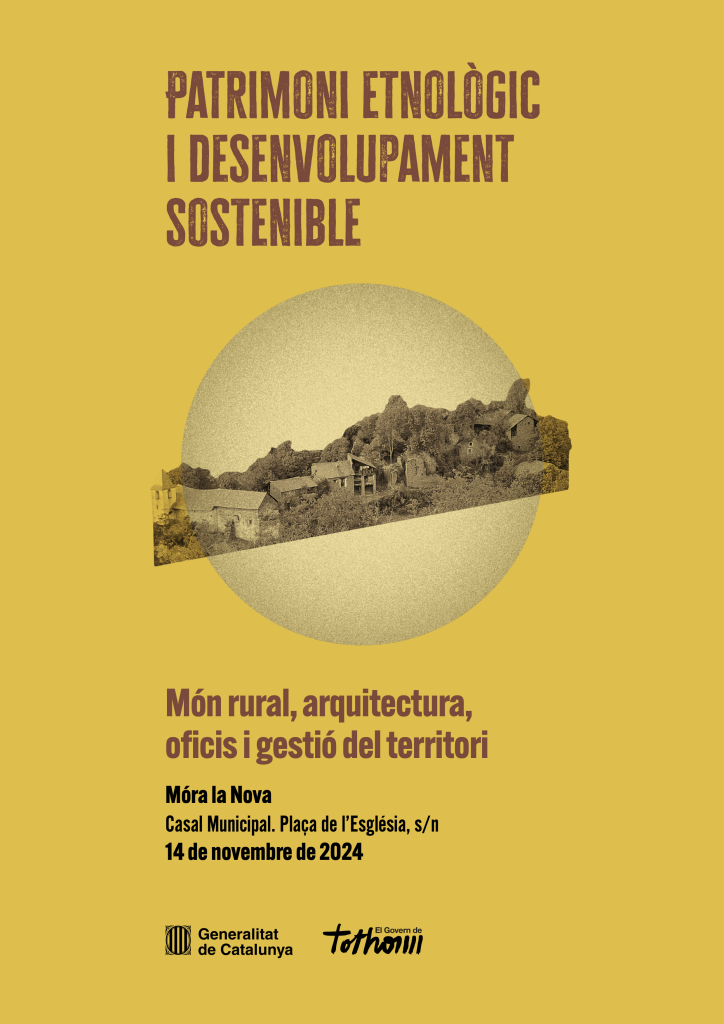
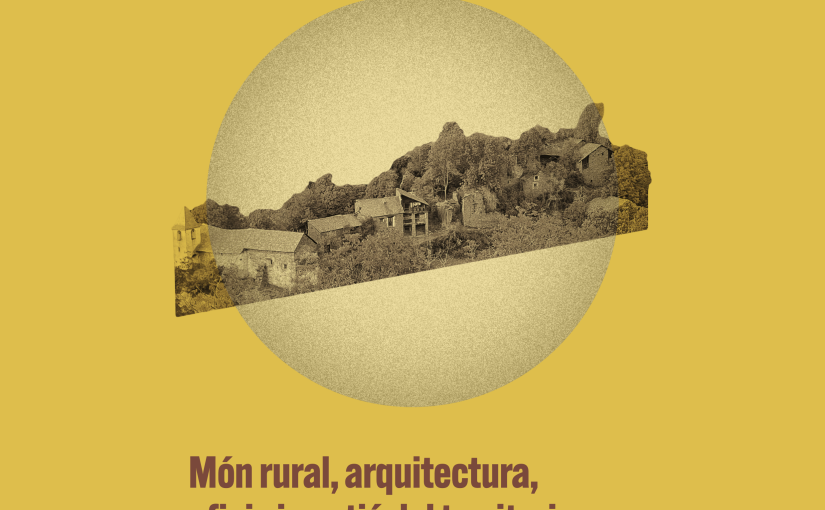
In November 2024, within the framework of the conference “Patrimoni etnològic i desenvolupament sostenible. Món rural, arquitectura, oficis i gestió del territori” held at the Casal Municipal of Móra la Nova, Valentina Maini (Associació GRETA) presented a lecture revisiting the role of traditional architecture in the current ecological transition. The text, recently published in 2025, offers a rigorous and timely reflection on the relationship between sustainability, technological innovation, and vernacular knowledge.
Beyond Metrics: Rethinking Sustainability
The article situates contemporary architectural practice within a context marked by climate urgency, the proliferation of assessment tools such as Life Cycle Assessment (LCA), and the growing centrality of ecological footprint calculations. While these instruments are essential for quantifying impacts and guiding design decisions, the text highlights their limitations: data inconsistency, methodological constraints, and the risk of reductionist interpretations that may lead to greenwashing.
In this framework, the author argues for complementing quantitative tools with qualitative, knowledge-based approaches rooted in long-term observation and experience—precisely the domain of traditional and vernacular construction cultures.
Tradition as a Technological Resource
Rather than proposing a nostalgic return to the past, the article frames traditional architecture as an active and strategic knowledge system. These practices—developed over generations—demonstrate a deep integration between material, climate, and social organization. As noted in the text, such knowledge can inform “new technological paradigms” based on local resource management, cyclical processes, and the integration of technical, ethical, and aesthetic values.
This perspective aligns tradition with innovation, suggesting that the future of sustainable architecture depends on their combined and critical reinterpretation.
The Five Principles of Ecodesign Revisited
A central contribution of the publication is the reinterpretation of traditional architecture through the lens of the five ecodesign principles ( see E. Datchefsky):
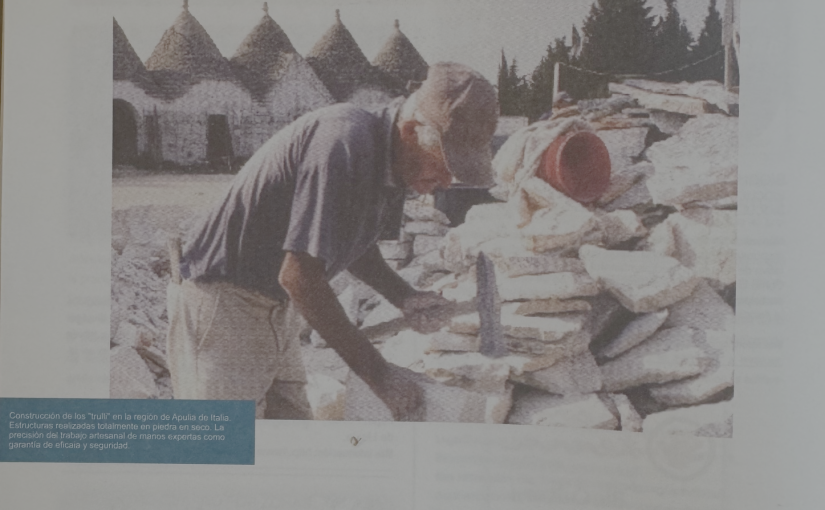
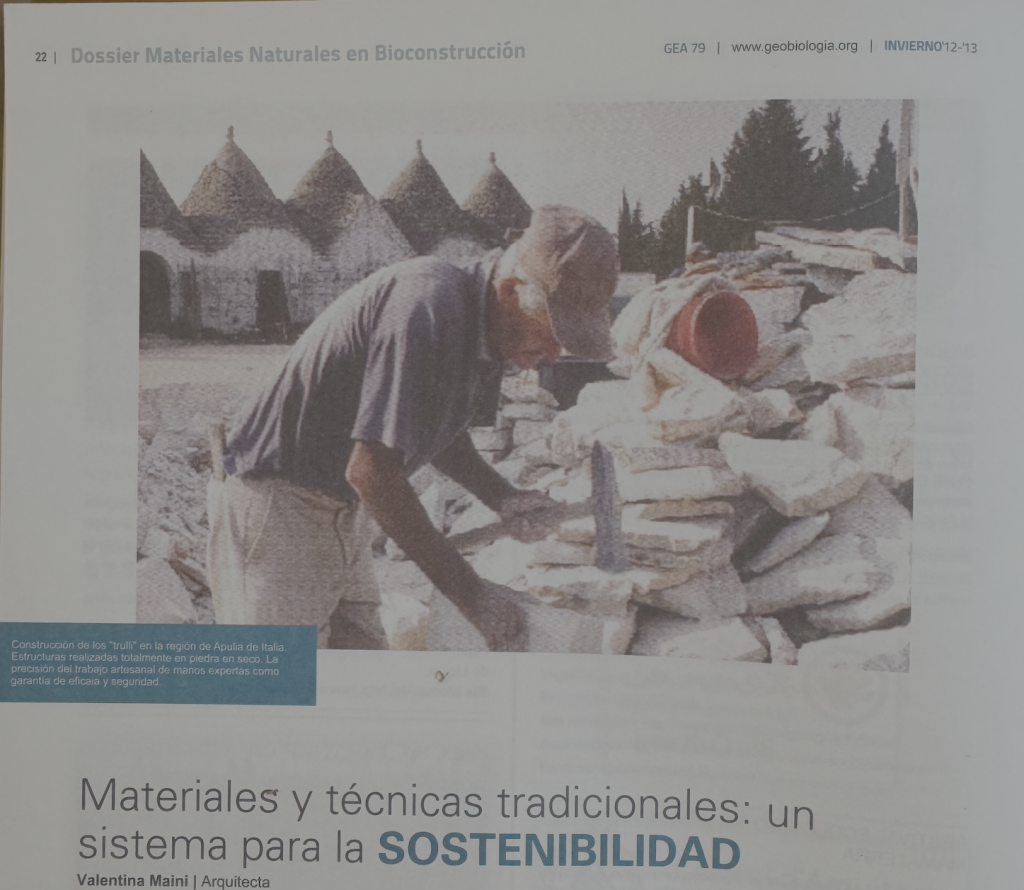
- Cyclicity: Traditional construction operates within closed material cycles, generating no waste and reintegrating resources into natural systems. The example of dry-stone construction illustrates how building processes can simultaneously shape and sustain the landscape.
- Solar Logic: Vernacular architectures demonstrate sophisticated bioclimatic strategies, optimizing orientation, geometry, and material properties to achieve thermal comfort with minimal energy demand. From Mediterranean rural buildings to Iranian wind towers, geometry emerges as a key design tool.
- Health and Safety: Traditional material systems, largely free from industrial chemical additives, offer important lessons for indoor air quality and long-term health—an increasingly critical issue in contemporary construction.
- Efficiency and Effectiveness: Limited resource availability historically led to highly optimized construction systems, where geometry and craftsmanship allowed maximum performance with minimal material and energy input.
- Social Dimension: Traditional building processes are inherently collective, based on shared knowledge, local economies, and participatory construction practices. This social embeddedness is identified as a key factor for resilient and sustainable development.
Between Knowledge and Implementation
Despite the growing recognition of these principles, the article underlines the persistent gap between knowledge and application. Regulatory frameworks, market structures, and cultural perceptions continue to limit the integration of traditional techniques into mainstream practice. At the same time, the dominance of techno-optimistic narratives—particularly around digital tools and artificial intelligence—risks overlooking the value of embodied, experience-based knowledge.
Towards a Cultural Transition
The publication concludes by emphasizing that the transition toward sustainability cannot rely solely on technological innovation or quantitative control systems. It requires a broader cultural shift—one that revalues traditional knowledge as a living resource and integrates it with contemporary tools and methodologies.
In this sense, traditional architecture is not merely a subject of heritage conservation, but a critical field of research and practice. Its principles—cyclical, adaptive, resource-efficient, and socially embedded—offer concrete pathways for redefining architectural design in the face of environmental and societal challenges.
This 2025 publication consolidates a line of research developed over decades and situates it firmly within current debates, reaffirming the relevance of vernacular knowledge as a cornerstone for a more sustainable and resilient built environment.
- Author: Valentina Maini
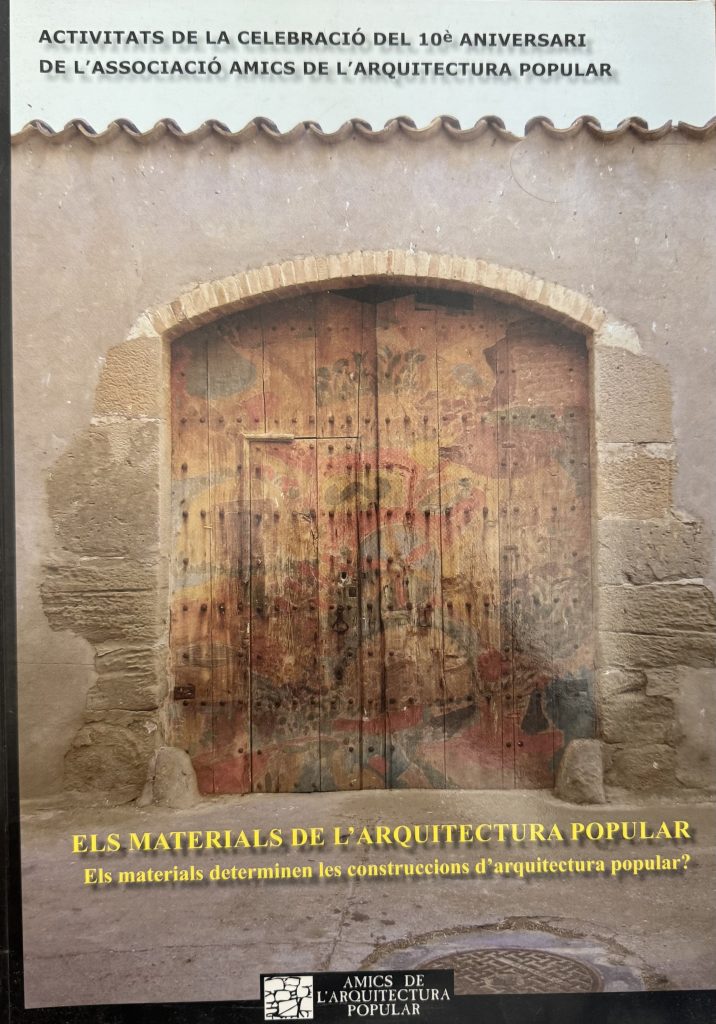
- Title: Què podem aprendre de l’arquitectura tradicional per respondre als reptes del segle xxi?
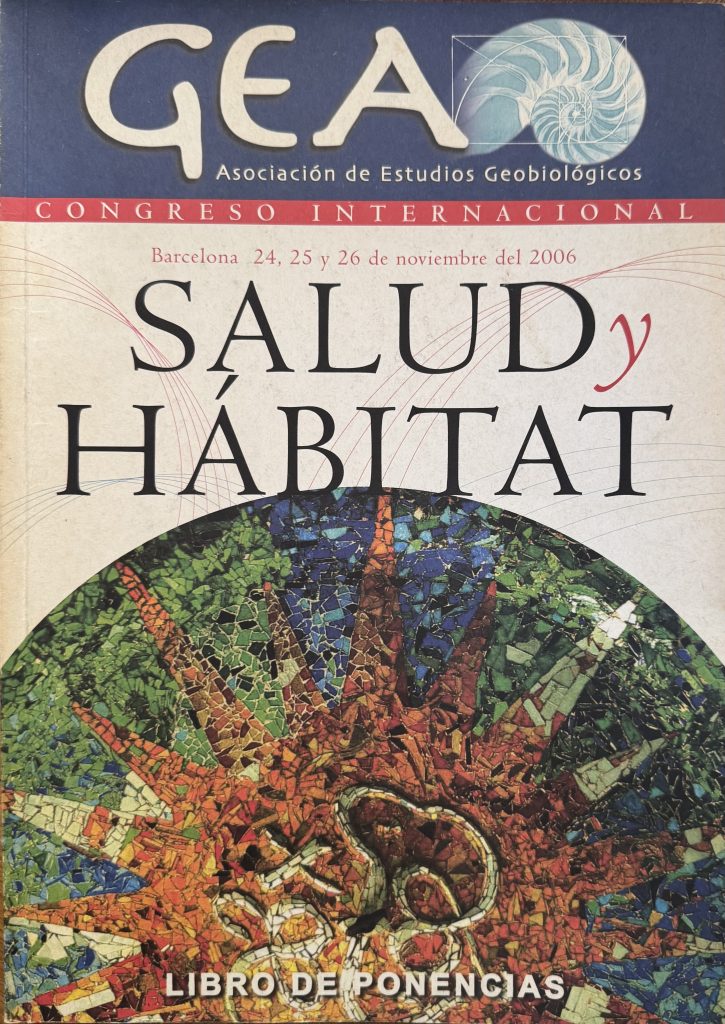
- in “”International Congress Salud y Habitat””Els Materials de l’Arquitectura Popular”
- edited by Associació amiss de l’arquitectura Popular, 2012
Materials for Sustainability: Revisiting Traditional Knowledge in Contemporary Practice
This text revisits a lecture delivered in 2009 and later published in 2012, reflecting on the role of traditional construction materials and techniques as a foundational system for sustainability. While the context of its origin predates many of today’s environmental frameworks, its arguments remain strikingly актуal and, in many respects, anticipatory of current debates.
At its core, the lecture proposes a shift in perspective: just as the Renaissance rediscovered classical knowledge to redefine cultural paradigms, the present ecological transition demands a renewed engagement with pre-industrial construction systems. These systems—based on materials such as earth, straw, wood, and stone—embody a form of environmental intelligence rooted in long-term observation, local adaptation, and the integration of material, technique, and territory.
The text highlights how the progressive loss of this “constructive memory” has led not only to a homogenization of building practices but also to significant risks in heritage conservation. Inappropriate interventions—such as the use of cement in earthen structures or the replacement of timber systems with reinforced concrete—are symptomatic of a broader disconnection between contemporary practice and traditional knowledge systems.
From an environmental standpoint, natural materials present clear advantages: low embodied energy, renewability, recyclability, and, in many cases, biodegradability. The article emphasizes that, when evaluated across their full life cycle, these materials can drastically reduce CO₂ emissions compared to industrial alternatives. However, it also introduces a critical nuance: sustainability is not inherent to the material alone but depends on the conditions of its production, transformation, and integration within ecosystems.
A key contribution of the lecture lies in its systemic reading of traditional architecture. Beyond material selection, it underscores the importance of passive design strategies—where form, orientation, and material properties are combined to achieve high levels of comfort without external energy inputs. Vernacular examples, such as wind towers or thick earthen walls, demonstrate how climatic responsiveness can be embedded in the very logic of construction.
The text also addresses the tension between tradition and innovation. Far from advocating a nostalgic return to the past, it calls for a hybrid approach in which contemporary technologies—mechanization, prefabrication, digital networks—enhance rather than replace traditional systems. The emergence of prefabricated straw panels or mechanized rammed earth techniques illustrates this potential for integration, expanding the applicability of natural materials within current regulatory and economic frameworks.
Equally relevant is the reflection on socio-economic dimensions. Traditional materials are described as inherently “social,” as their use is often tied to local resources, community participation, and accessible construction processes. Yet, paradoxically, in contemporary markets they can become more expensive due to limited industrialization and distribution. This contradiction reveals the need for institutional support, research investment, and regulatory adaptation to enable their broader adoption.
Finally, the lecture identifies the main barriers that continue to limit the use of natural materials: cultural prejudice, lack of technical knowledge, insufficient normative frameworks, and fragmentation among stakeholders. Overcoming these obstacles requires coordinated action—linking research institutions, professionals, industry, and public administrations—in order to build a shared and operational knowledge base.
More than a decade after its publication, this text can be read not only as a reflection but as a manifesto. It anticipates current discussions on circularity, low-carbon construction, and regenerative design, while insisting on a fundamental idea: sustainability is not merely a matter of performance metrics, but of re-establishing meaningful relationships between materials, environments, and societies.
In this sense, traditional construction techniques are not relics of the past, but active resources for redefining the future of architecture.