Heritage | BIM

Using BIM ( Building Information Technology) to address traditional knowledge

BIM, LiDAR and Vernacular Intelligence: The LLINDAR Project (GRETA)

The LLINDAR project, developed within the framework of GRETA between 2024 and 2025, proposes a rigorous exploration of how digital technologies can contribute to the understanding and transmission of vernacular architectural knowledge. Focused on the masos of Cap de Creus, and particularly on case studies such as Mas Bufadors in Port de la Selva and Mas Marès in Roses, the work situates itself at the intersection between heritage, territory, and digital representation. 

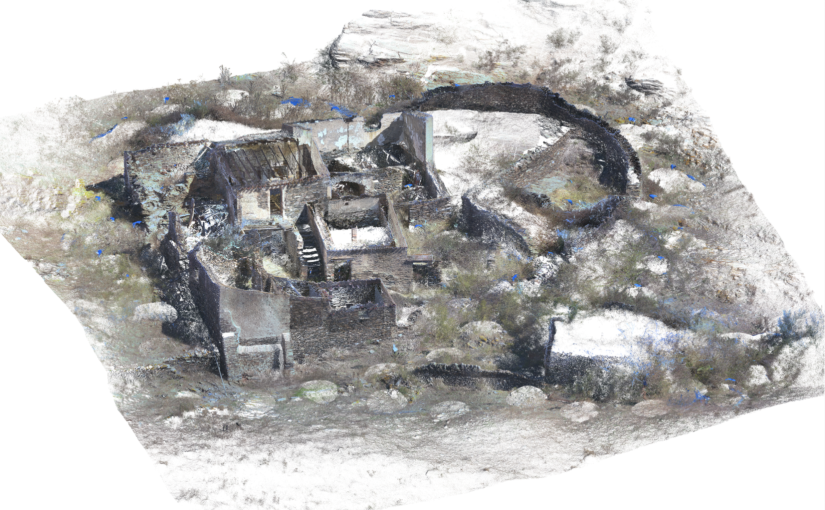
The project begins with the acquisition of high-resolution LiDAR scans, generating dense point clouds that capture the built remains and their surrounding landscape with a high degree of precision. In the case of Mas Bufadors, the resulting model does not isolate architecture from context but records a continuous field where stone walls, voids, topography, and vegetation coexist. This condition is fundamental, as it allows the architectural object to be understood not as an autonomous entity but as part of a broader environmental and territorial system. 

From this initial dataset, the work advances through a process of interpretation that transforms raw geometric information into architectural knowledge. The point cloud, inherently non-hierarchical, becomes the basis for a series of drawings that progressively organize and reveal the internal logic of the construction. Rather than imposing predefined categories, the project reads the existing reality through successive approximations, maintaining a close relationship with the material evidence captured in the scan.

This approach is particularly evident in the development of plans. In Mas Bufadors, the building is not represented through a single conventional floor plan but through a sequence of horizontal slices at different levels, corresponding to varying heights within the structure. These plans, defined at levels such as +5, +7, +9, +11, and +13, reconstruct the building progressively, revealing how spaces, walls, and enclosures appear, disappear, or transform across vertical strata. The result is a stratified reading of architecture that reflects its condition as an evolving and partially fragmented system, rather than a fixed and complete object.

A similar logic is applied in the case of Mas Marès, where the documentation is structured through a comprehensive set of drawings that includes plans, transversal sections, longitudinal sections, and elevations. The organization of this material, explicitly indexed within the project documentation, reflects a systematic effort to read the building from multiple complementary perspectives. The plans are developed at different heights, ranging from +1.50 to +7.50 meters, allowing a detailed reconstruction of spatial organization, while maintaining the direct link with the point cloud data from which they are derived.

The sections, both transversal and longitudinal, play a central role in the project. In Mas Marès, an extensive series of sectional cuts is generated across the entire building, effectively producing a continuous reading of the construction and its relationship with the terrain. These sections reveal the adaptation of the architecture to the sloped topography, the thickness and material consistency of the stone walls, and the articulation between different construction phases. At the same time, they make visible processes of degradation, collapse, and transformation, which are integral to the current state of the building. 

Within this workflow, BIM is introduced not as a tool for standardization but as a framework for structuring and managing complexity. The transition from LiDAR data to BIM models allows the integration of geometric, material, and interpretative information within a single environment. This makes it possible to organize the building not only in terms of form, but also in terms of constructive logic, phasing, and potential intervention strategies. In this sense, BIM operates as a bridge between documentation and project, enabling the translation of vernacular knowledge into formats that are accessible, analyzable, and potentially actionable.

The LLINDAR project ultimately demonstrates that digital technologies such as LiDAR and BIM can move beyond their conventional roles as tools of representation to become instruments of interpretation. By maintaining fidelity to the complexity of the existing fabric while introducing structured layers of analysis, the work establishes a methodological framework that connects empirical construction knowledge with contemporary design practices. In doing so, it repositions vernacular architecture as an active field of inquiry, capable of informing current approaches to sustainability, territorial integration, and architectural resilience.

The project documentation reveals a highly structured set of plans, where the geometry of the building is rigorously defined through a modular grid system. The foundation plan already integrates this logic, identifying structural walls, load pathways, and dimensional relationships between elements with exact measurements and levels. The use of Ytong masonry is clearly embedded in this structural layer, providing a stable and continuous base onto which lighter systems are later assembled.

Sections play a central role in understanding the project. Longitudinal and transversal cuts describe not only the spatial configuration but also the constructive stratigraphy, from terrain adaptation to roof assembly. The relationship with topography is explicitly modeled, with precise level differences and terrain adjustments that define the building’s implantation. These sections allow the self-builder to read the building as a sequence of layers and heights, rather than as abstract projections.

At the same time, the structural articulation between systems becomes visible in dedicated drawings. The masonry walls, identified with specific typologies, coexist with timber frameworks and lintel systems that resolve openings and load. This layered reading is essential in hybrid construction, where the logic of assembly is not uniform but negotiated between materials.

The BIM model also extends into detailed interior plans, where each space is dimensioned with millimetric precision. Kitchens, living areas, and bedrooms are not only spatially defined but constructed through a sequence of measurable components, allowing a direct translation into on-site execution. This reinforces the idea of the model as a buildable document rather than a descriptive one.

A particularly relevant aspect is the integration of performance data within the model. Envelope systems include quantified layers with associated thermal properties, such as insulation thicknesses and conductivity values. In a system combining masonry and straw, this becomes critical to ensure hygrothermal compatibility and overall energy performance.

The visualizations extracted from the BIM environment complete this system of knowledge. Exterior perspectives situate the building in its environment, showing orientation, solar exposure, and material expression. Interior views, on the other hand, translate the constructive logic into inhabitable space, making visible the continuity between structure, enclosure, and use. These images are not merely illustrative; they act as interpretative tools that allow non-expert actors to anticipate the spatial and material outcome of their work.

In this case study, BIM demonstrates its capacity to manage complexity without losing readability. By integrating masonry precision with the variability of bio-based materials such as straw, the model becomes a shared platform where design, performance, and construction converge. For self-building practices, this is particularly significant: it enables the coordination of hybrid systems while maintaining clarity, supporting a process where different techniques can coexist within a controlled and accessible framework.

Vernacular architecture | Sustainability

What Can We Learn from Traditional Architecture to Address 21st Century Challenges?

In November 2024, within the framework of the conference “Patrimoni etnològic i desenvolupament sostenible. Món rural, arquitectura, oficis i gestió del territori” held at the Casal Municipal of Móra la Nova, Valentina Maini (Associació GRETA) presented a lecture revisiting the role of traditional architecture in the current ecological transition. The text, recently published in 2025, offers a rigorous and timely reflection on the relationship between sustainability, technological innovation, and vernacular knowledge. 

Beyond Metrics: Rethinking Sustainability

The article situates contemporary architectural practice within a context marked by climate urgency, the proliferation of assessment tools such as Life Cycle Assessment (LCA), and the growing centrality of ecological footprint calculations. While these instruments are essential for quantifying impacts and guiding design decisions, the text highlights their limitations: data inconsistency, methodological constraints, and the risk of reductionist interpretations that may lead to greenwashing. 

In this framework, the author argues for complementing quantitative tools with qualitative, knowledge-based approaches rooted in long-term observation and experience—precisely the domain of traditional and vernacular construction cultures.

Tradition as a Technological Resource

Rather than proposing a nostalgic return to the past, the article frames traditional architecture as an active and strategic knowledge system. These practices—developed over generations—demonstrate a deep integration between material, climate, and social organization. As noted in the text, such knowledge can inform “new technological paradigms” based on local resource management, cyclical processes, and the integration of technical, ethical, and aesthetic values. 

This perspective aligns tradition with innovation, suggesting that the future of sustainable architecture depends on their combined and critical reinterpretation.

The Five Principles of Ecodesign Revisited

A central contribution of the publication is the reinterpretation of traditional architecture through the lens of the five ecodesign principles ( see E. Datchefsky):

  • Cyclicity: Traditional construction operates within closed material cycles, generating no waste and reintegrating resources into natural systems. The example of dry-stone construction illustrates how building processes can simultaneously shape and sustain the landscape. 
  • Solar Logic: Vernacular architectures demonstrate sophisticated bioclimatic strategies, optimizing orientation, geometry, and material properties to achieve thermal comfort with minimal energy demand. From Mediterranean rural buildings to Iranian wind towers, geometry emerges as a key design tool. 
  • Health and Safety: Traditional material systems, largely free from industrial chemical additives, offer important lessons for indoor air quality and long-term health—an increasingly critical issue in contemporary construction. 
  • Efficiency and Effectiveness: Limited resource availability historically led to highly optimized construction systems, where geometry and craftsmanship allowed maximum performance with minimal material and energy input. 
  • Social Dimension: Traditional building processes are inherently collective, based on shared knowledge, local economies, and participatory construction practices. This social embeddedness is identified as a key factor for resilient and sustainable development. 

Between Knowledge and Implementation

Despite the growing recognition of these principles, the article underlines the persistent gap between knowledge and application. Regulatory frameworks, market structures, and cultural perceptions continue to limit the integration of traditional techniques into mainstream practice. At the same time, the dominance of techno-optimistic narratives—particularly around digital tools and artificial intelligence—risks overlooking the value of embodied, experience-based knowledge.

Towards a Cultural Transition

The publication concludes by emphasizing that the transition toward sustainability cannot rely solely on technological innovation or quantitative control systems. It requires a broader cultural shift—one that revalues traditional knowledge as a living resource and integrates it with contemporary tools and methodologies.

In this sense, traditional architecture is not merely a subject of heritage conservation, but a critical field of research and practice. Its principles—cyclical, adaptive, resource-efficient, and socially embedded—offer concrete pathways for redefining architectural design in the face of environmental and societal challenges.

This 2025 publication consolidates a line of research developed over decades and situates it firmly within current debates, reaffirming the relevance of vernacular knowledge as a cornerstone for a more sustainable and resilient built environment.

  • Author: Valentina Maini
  • Title: Què podem aprendre de l’arquitectura tradicional per respondre als reptes del segle xxi?
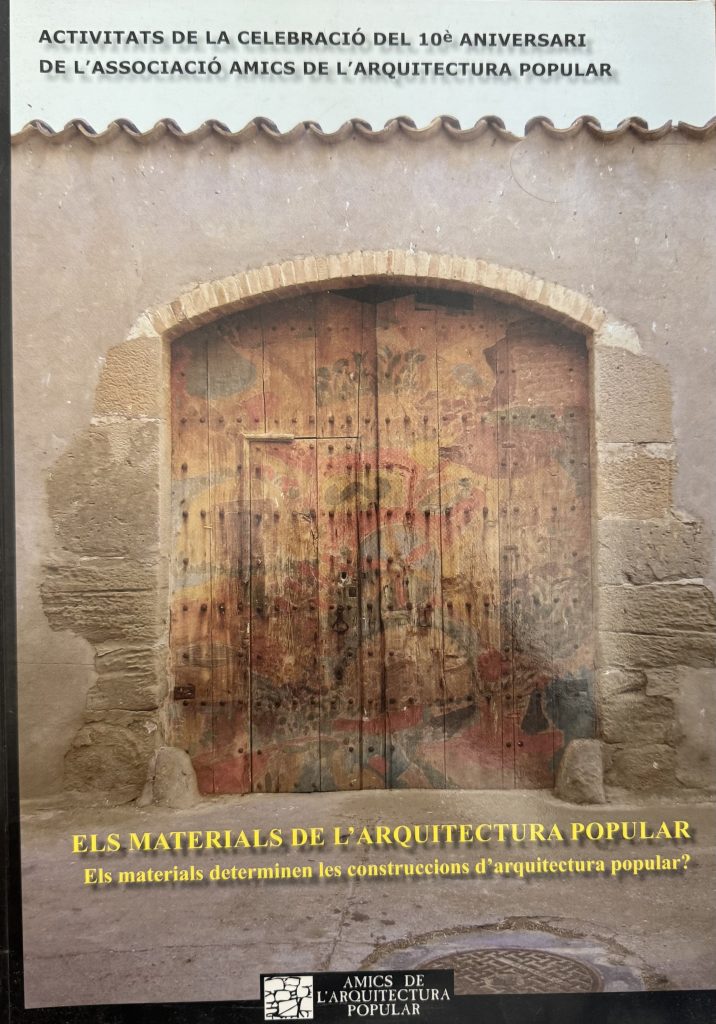
  • in “”International Congress Salud y Habitat””Els Materials de l’Arquitectura Popular”
  • edited by Associació amiss de l’arquitectura Popular, 2012

Materials for Sustainability: Revisiting Traditional Knowledge in Contemporary Practice

This text revisits a lecture delivered in 2009 and later published in 2012, reflecting on the role of traditional construction materials and techniques as a foundational system for sustainability. While the context of its origin predates many of today’s environmental frameworks, its arguments remain strikingly актуal and, in many respects, anticipatory of current debates.

At its core, the lecture proposes a shift in perspective: just as the Renaissance rediscovered classical knowledge to redefine cultural paradigms, the present ecological transition demands a renewed engagement with pre-industrial construction systems. These systems—based on materials such as earth, straw, wood, and stone—embody a form of environmental intelligence rooted in long-term observation, local adaptation, and the integration of material, technique, and territory. 

The text highlights how the progressive loss of this “constructive memory” has led not only to a homogenization of building practices but also to significant risks in heritage conservation. Inappropriate interventions—such as the use of cement in earthen structures or the replacement of timber systems with reinforced concrete—are symptomatic of a broader disconnection between contemporary practice and traditional knowledge systems. 

From an environmental standpoint, natural materials present clear advantages: low embodied energy, renewability, recyclability, and, in many cases, biodegradability. The article emphasizes that, when evaluated across their full life cycle, these materials can drastically reduce CO₂ emissions compared to industrial alternatives. However, it also introduces a critical nuance: sustainability is not inherent to the material alone but depends on the conditions of its production, transformation, and integration within ecosystems. 

A key contribution of the lecture lies in its systemic reading of traditional architecture. Beyond material selection, it underscores the importance of passive design strategies—where form, orientation, and material properties are combined to achieve high levels of comfort without external energy inputs. Vernacular examples, such as wind towers or thick earthen walls, demonstrate how climatic responsiveness can be embedded in the very logic of construction. 

The text also addresses the tension between tradition and innovation. Far from advocating a nostalgic return to the past, it calls for a hybrid approach in which contemporary technologies—mechanization, prefabrication, digital networks—enhance rather than replace traditional systems. The emergence of prefabricated straw panels or mechanized rammed earth techniques illustrates this potential for integration, expanding the applicability of natural materials within current regulatory and economic frameworks.

Equally relevant is the reflection on socio-economic dimensions. Traditional materials are described as inherently “social,” as their use is often tied to local resources, community participation, and accessible construction processes. Yet, paradoxically, in contemporary markets they can become more expensive due to limited industrialization and distribution. This contradiction reveals the need for institutional support, research investment, and regulatory adaptation to enable their broader adoption.

Finally, the lecture identifies the main barriers that continue to limit the use of natural materials: cultural prejudice, lack of technical knowledge, insufficient normative frameworks, and fragmentation among stakeholders. Overcoming these obstacles requires coordinated action—linking research institutions, professionals, industry, and public administrations—in order to build a shared and operational knowledge base.

More than a decade after its publication, this text can be read not only as a reflection but as a manifesto. It anticipates current discussions on circularity, low-carbon construction, and regenerative design, while insisting on a fundamental idea: sustainability is not merely a matter of performance metrics, but of re-establishing meaningful relationships between materials, environments, and societies.

In this sense, traditional construction techniques are not relics of the past, but active resources for redefining the future of architecture.

Materials | Sustainability

  • Author: Valentina Maini
  • Title: Traditional materials and building techniques: a system for a sustainability
  • in “”International Congress Salud y Habitat””Els Materials de l’Arquitectura Popular”
  • edited by Associació amiss de l’arquitectura Popular, 2012

Materials for Sustainability: Revisiting Traditional Knowledge in Contemporary Practice

This text revisits a lecture delivered in 2009 and later published in 2012, reflecting on the role of traditional construction materials and techniques as a foundational system for sustainability. While the context of its origin predates many of today’s environmental frameworks, its arguments remain strikingly актуal and, in many respects, anticipatory of current debates.

At its core, the lecture proposes a shift in perspective: just as the Renaissance rediscovered classical knowledge to redefine cultural paradigms, the present ecological transition demands a renewed engagement with pre-industrial construction systems. These systems—based on materials such as earth, straw, wood, and stone—embody a form of environmental intelligence rooted in long-term observation, local adaptation, and the integration of material, technique, and territory. 

The text highlights how the progressive loss of this “constructive memory” has led not only to a homogenization of building practices but also to significant risks in heritage conservation. Inappropriate interventions—such as the use of cement in earthen structures or the replacement of timber systems with reinforced concrete—are symptomatic of a broader disconnection between contemporary practice and traditional knowledge systems. 

From an environmental standpoint, natural materials present clear advantages: low embodied energy, renewability, recyclability, and, in many cases, biodegradability. The article emphasizes that, when evaluated across their full life cycle, these materials can drastically reduce CO₂ emissions compared to industrial alternatives. However, it also introduces a critical nuance: sustainability is not inherent to the material alone but depends on the conditions of its production, transformation, and integration within ecosystems. 

A key contribution of the lecture lies in its systemic reading of traditional architecture. Beyond material selection, it underscores the importance of passive design strategies—where form, orientation, and material properties are combined to achieve high levels of comfort without external energy inputs. Vernacular examples, such as wind towers or thick earthen walls, demonstrate how climatic responsiveness can be embedded in the very logic of construction. 

The text also addresses the tension between tradition and innovation. Far from advocating a nostalgic return to the past, it calls for a hybrid approach in which contemporary technologies—mechanization, prefabrication, digital networks—enhance rather than replace traditional systems. The emergence of prefabricated straw panels or mechanized rammed earth techniques illustrates this potential for integration, expanding the applicability of natural materials within current regulatory and economic frameworks.

Equally relevant is the reflection on socio-economic dimensions. Traditional materials are described as inherently “social,” as their use is often tied to local resources, community participation, and accessible construction processes. Yet, paradoxically, in contemporary markets they can become more expensive due to limited industrialization and distribution. This contradiction reveals the need for institutional support, research investment, and regulatory adaptation to enable their broader adoption.

Finally, the lecture identifies the main barriers that continue to limit the use of natural materials: cultural prejudice, lack of technical knowledge, insufficient normative frameworks, and fragmentation among stakeholders. Overcoming these obstacles requires coordinated action—linking research institutions, professionals, industry, and public administrations—in order to build a shared and operational knowledge base.

More than a decade after its publication, this text can be read not only as a reflection but as a manifesto. It anticipates current discussions on circularity, low-carbon construction, and regenerative design, while insisting on a fundamental idea: sustainability is not merely a matter of performance metrics, but of re-establishing meaningful relationships between materials, environments, and societies.

In this sense, traditional construction techniques are not relics of the past, but active resources for redefining the future of architecture.

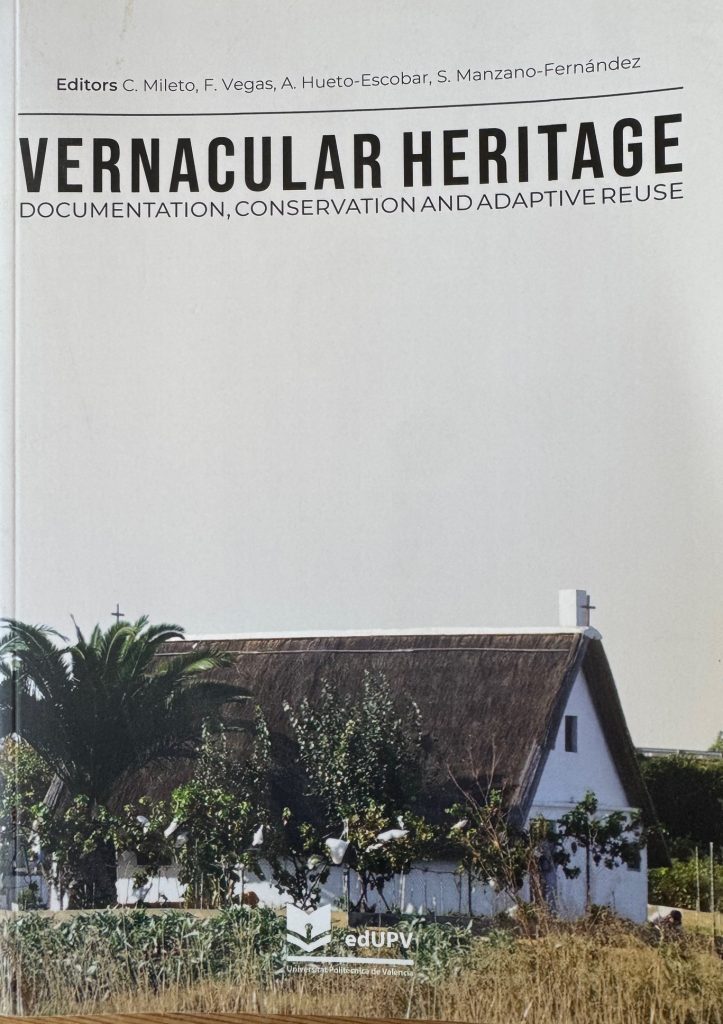
Heritage 026

Title: From Vernacular Wisdom to Contemporary Design, Bridging traditional patterns with Modern Sustainability

In Conference proceeding Volume 1 : Vernacular Heritage , UPV , 2025

Editors : C.Mileto, F.Vegas, A.Hueto-Escobar, S.Manzano-Fernández

Article presented at the 2026 edition of the International Conference Heritage 2025

doi: 10.4995/HERITAGE2025.2025.19428

Back to publishing