- Author: Valentina Maini
- Title: Architecture and Health or the Health of Architects
- in “International Congress Salud y Habitat” Barcelona 24-26 september 2006
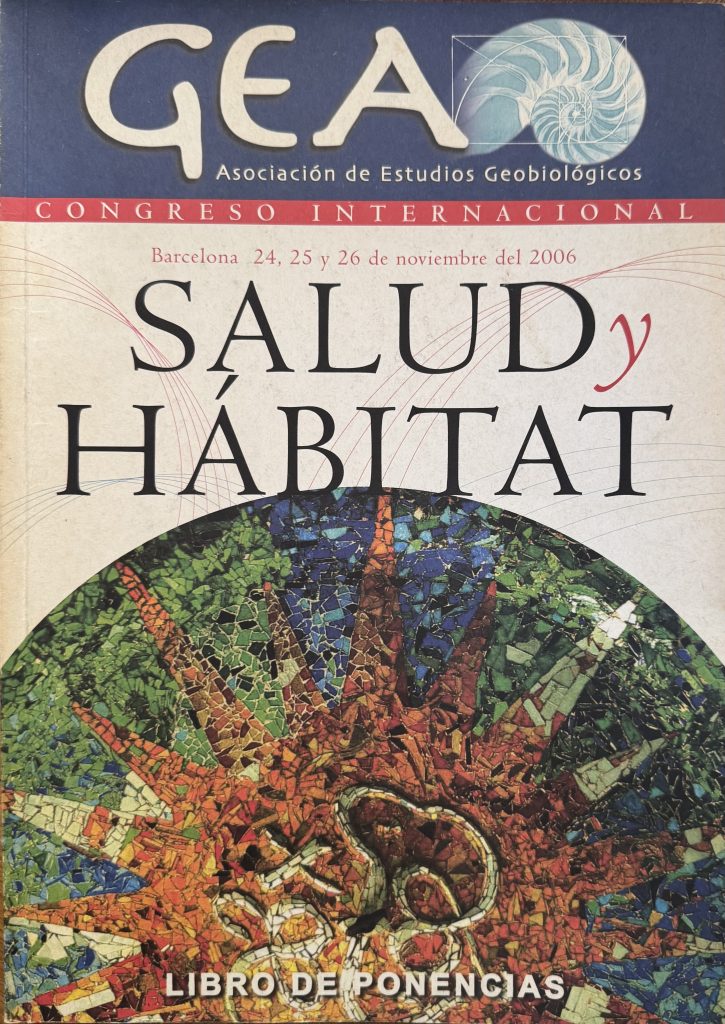
On November 24, 2006, within the framework of the Congreso Internacional de Salud y Hábitat – GEA in Barcelona, architect Valentina Maini delivered a presentation addressing a topic that, at the time, remained largely marginal within architectural practice: the relationship between health and the built environment.
The intervention critically examined the position of the “average architect,” highlighting the absence of specific training on health-related issues within academic curricula and the limited scope of institutional sustainability frameworks, which were predominantly focused on energy efficiency.
A central argument of the presentation was the growing gap between emerging user concerns—particularly regarding indoor environmental quality—and the slow response of both the market and regulatory bodies. In this context, the architect was positioned not merely as a service provider but as an active agent capable of introducing innovation and critical awareness into the construction sector.
The talk also emphasized the importance of self-directed learning and knowledge exchange. Early digital platforms and professional networks were identified as essential tools to overcome local limitations and access international research and practices.
From a technical perspective, the presentation introduced key concepts that today are widely recognized but were then still emerging in architectural discourse: Sick Building Syndrome (SBS), Building Related Illness (BRI), and the impact of pollutants such as VOCs, formaldehyde, radon, and electromagnetic fields. The analysis underscored the long-term health risks associated with industrial materials and the lack of accessible, user-oriented information within institutional frameworks.
One of the most relevant conclusions was the assertion that there is no sustainability without health, advocating for a holistic approach to architecture that integrates material selection, indoor air quality, and environmental impact. Traditional construction knowledge and natural materials were proposed as key references for developing healthier building practices.
Nearly two decades later, many of the issues raised in this presentation have become central to contemporary architectural discourse. However, the challenges identified—particularly in terms of knowledge transfer, regulation, and market alignment—remain highly relevant.
This early reflection can be understood as part of a broader trajectory that anticipates current debates on healthy buildings, bioconstruction, and the re-evaluation of vernacular intelligence within sustainable design.